← All speeches
29 November 2022
Ng Ling Ling
Speech at the Section 377A and Constitutional Amendment Debate
Ang Mo Kio GRC, PAP, MP
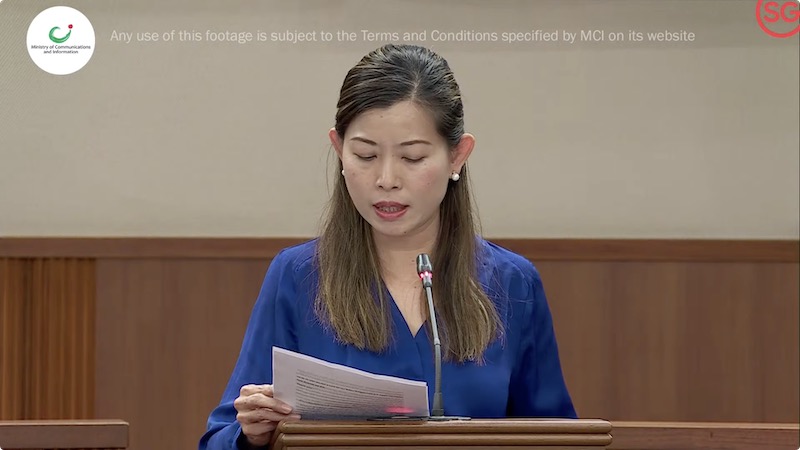
Mr Speaker, I rise to speak on the Penal Code and the Constitutional Amendment Bill as a mother, a community leader, a friend, in addition to my role as an elected legislator of this land.
Since the proposed repeal of Section 377A was mentioned in the media and the public, I have received several written appeals from my Jalan Kayu residents to urge the Government not to do so. These residents are mostly parents of young children and youth. As a mother, I can relate to their concerns.
In October 2007, when the Parliament undertook a comprehensive review of our Penal Code since its major amendments in 1984, the public feedback on Section 377A was emotional. The Cabinet, after extensive public consultations and discussions, concluded at the end of the debate that Singapore society remained conservative and the majority preferred to uphold a stable society with traditional heterosexual family values, while giving homosexuals the space to live their lives and contribute to society.
As one who has been brought up in a traditional Asian family, I understand Singaporeans who uphold the construct of a family formed by marriage between a man and a woman. This is an important cornerstone of any society since the start and for the continuation of human history.
Why then the need to repeal Section 377A now? The Minister for Home Affairs, Mr Shanmugam, gave a detailed explanation. Section 377A was first introduced in 1938, when Singapore was still part of the Straits Settlement and under the colonial rules. The origin of the provisions of Section 377A stretched even further back to the Victorian times in the 1860s.
Looking at the recent developments in other jurisdictions like India, the Supreme Court struck down part of Section 377 of the Indian Penal Code which also criminalised gay sex. It went further to redefine marriage and familiar relationships. As recent as in August this year, India's Supreme Court widened the definition of the family institution and ruled that familiar relationships can also take the form of domestic, unmarried partnerships and queer relationships.
To me, what happened in India gives a glimpse of the implications of society norms when the judiciary branch of the government, which is the courts, instead of the legislative branch of the government, which is the Parliament, began to interpret what are social norms because the legislative branch, that is the Parliament, avoided dealing with the matter.
As such, I think it is right for this Parliament of Singapore to debate and decide on the risks posed by recent constitutional challenges that our Court is also facing in terms of Section 377A in the Penal Code, with the most recent one in just February this year in Tan Seng Kee v Attorney-General case.
As I am not a trained lawyer, I will not dwell further into the legality of this case, which Minister Shanmugam has also explained yesterday. Suffice to say that I am of the view that this Parliament has the duty to set in place constitutional amendments to clarify our definitions of marriage and family.
In this regard, I have also taken careful note as a community leader of the wider views, especially among our younger generations whose views must also be valued. I will not repeat the studies and surveys that several of my fellow Honourable Parliamentarians have mentioned about their attitudes towards the repeal of Section 377A among our younger generations.
I will share that in a Youth Network dialogue session which I attended shortly after National Day Rally this year, almost the full hall of youth audience between the age of 15 and 35 years old raised their hands in support of the repeal of Section 377A. On further dialogue, I learned that most youth are of the view that a law that will not be enforced is better off removed.
I understand the views of the youth. What touched me most in that session was a few young adults who shared that they regretted being too quick to judge and being insensitive in their teenage years when some peers struggled with their sexual identity in their puberty years. With more maturity now, they felt that they could have been more supportive. One even contacted me for opportunities in social service agencies to serve as a counsellor for the homosexual individuals who may be in need, like how we would help any other individuals who are in need in Singapore.
As a trusted friend of a few homosexual individuals, some of whom I have known since school days, I have heard their stories of life's challenges, of loss and of regaining of hopes. What they taught me as a friend is the need for human kindness, compassion and love to prevail over judgement and stigmatisation.
As we propose the repeal of Section 377A in the Penal code and amend our Constitution for the Parliament of the day to be able to reflect our majority electorate's values on the definition of families in Singapore, let us do so with always a care for our fellow Singaporeans in heart, no matter how diverse we are.
Mr Speaker, I struggled with my speech for many months, like many honourable parliamentarians who have spoken up in these two days of debate. In the end, it was the reconciliation of my mind, of the duty I have as a parliamentarian, and my heart, which holds respect and care for people, that accept the need for the repeal and the important amendments to our Constitution, which will leave space for us as a people to continue to forge understanding, reconciliation and a future together.
Thank you for allowing me to participate in this debate.