← All speeches
29 November 2022
Louis Ng
Speech at the Section 377A and Constitutional Amendment Debate
Nee Soon GRC, PAP, MP
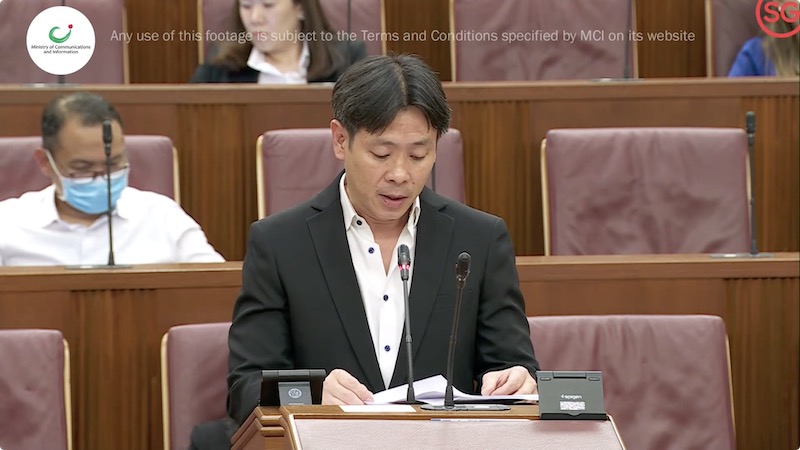
Sir, the repeal of Section 377A holds great significance for many across the social and religious spectrum. The heated civil discourse and vigorous advocacy speaks to strongly held belief that many hold on this issue. This has been an opportunity for Singaporeans to learn to disagree in a spirited but civil way. I believe that such open debate is a sign of a healthy and functioning democracy. However, in doing so, we cannot lose sight of our shared humanity.
I can do no better than to quote Muis. In response to the repeal of Section 377A, it said that Muslim law, quote, places importance on human dignity, respect and peaceful relations, unquote. It further said, quote, these values are crucial as we navigate complex social religious issues today. As Muslims, we should treat everyone with full dignity and respect. Everyone, regardless of their sexual orientation, must feel safe in our society and institutions. Muslims should uphold the best of character, charity and compassion in dealing with others, even with whom we disagree, unquote.
I believe these statements apply not just to those of the Muslim faith, but to all of us. As we continue to engage on discrimination against the gay community and discrimination of any form, I hope we continue to treat each other with dignity, respect and kindness. In doing so, we cannot shy away from having conversations with people whom we do not identify with. We need to continue the dialogue on issues affecting the gay community with the intent of achieving progress for everyone.
For the gay community, the repeal of Section 377A is the correct thing to do. It is correct not only because of the likelihood of success of any court challenges. It is the correct thing to do because gay Singaporeans deserve, like any other member of society, not to be criminalised for their private behaviour. The repeal of Section 377A is a positive step towards making Singapore a more equal and inclusive society.
We should recognise and thank the collective effort of activists and organisations over the years to raise awareness about the challenges that the gay community face and foster acceptance of gay individuals within our society. We need to continue to have conversations about this issue as our nation progresses.
I have three points of clarification on both bills.
My first point is on the treatment of prior convictions under Section 377A. In his National Day rally speech when he announced the intended repeal of Section 377A, PM Lee said he believed that the repeal is the right thing to do and it would provide relief to gay Singaporeans. Minister Shanmugam has also said that it is wrong to continue criminalising the sexuality of gay Singaporeans and what they do in private. Nobody, he said, deserves to be stigmatised because of their sexual orientation. So repealing 377A and removing their pain is the right thing to do.
If the continued stigmatisation of gay Singaporeans is wrong, then the continued stigmatisation of gay Singaporeans because of their record of conviction under Section 377A must also be wrong. Under the registration of criminal acts, an offence under Section 377A is a registrable crime. Any criminal record of conviction under Section 377A will become spent after a crime-free period of five years. An exception is if the person is disqualified from having their criminal record being spent. As such, this may mean there may be individuals with existing records of conviction under Section 377A because the conviction was within a five-year period or because the individual is disqualified from having their record being spent. These individuals may, due to the record, remain stigmatised even as we repeal Section 377A.
Can Minister clarify if there are any individuals with existing records of conviction under 377A and who has not been spent? Can Minister clarify how these prior convictions will be treated?
My second point is about support provided to students of diverse genders. The repeal of Section 377A sends a strong message against the discrimination of gay Singaporeans on the basis of their private behaviour. As Minister Shanmugam shared, this legislative step is a significant step in removing stigma on a legislative level and will also go some way in removing hurt. However, discrimination and stigma do not just exist in abstract policies. Many individuals of diverse genders face discrimination, stigma and hurt in their day-to-day interactions in the community and even with their closest loved ones. These challenges can be especially daunting for young students who are just starting to build their identity and navigate their teenage years, which can already be a stressful experience for anyone. Many surveys, both local and international, show that many individuals of diverse genders experience symptoms of generalised anxiety disorder. Many also experience major depressive disorder and engage in self-harm.
Our teachers and counsellors in schools are a first line of defence in identifying students who may be struggling from such stresses and challenges. They are also well placed to facilitate appropriate intervention. Can Ministers share what support has been or will be extended to such students? In particular, what role will teachers, counsellors and schools play in identifying students of diverse genders who may be struggling and extending such support to them?
My final point is on the new Article 156-1 in the Constitution. It enables the legislature and the government to define, regulate, protect, safeguard, support, foster and promote the institution of marriage. In the explanatory statement, examples of such activities included housing preference and financial benefits for married persons, and education and media policies that promote and safeguard the institution of marriage. As we encourage marriage, I hope we do not discriminate against single parents, whether they are unmarried, divorced or widowed. I am glad Minister Masagos provided some assurances on this during his opening speech that single parents will not be left behind. Indeed, increased support for single parents is one of the main recommendations in the White Paper on Singapore's Women's Development, published this year by the Government. I have raised recommendations on housing policies to ensure single and widowed parents and their children will have a roof over their heads. I have also asked for single and widowed parents to receive the Parenthood Tax Rebate, the Working Mother's Child Relief and the cash component of the Baby Bonus.
It is a whole suite of parenthood policies that exclude and discriminate against single and widowed parents. There is a lot more we can do. Can Minister confirm that even as the Government takes steps to define, regulate, promote, safeguard, support, foster and promote the institution of marriage, we will also continue to review our policies to ensure that single and widowed parents are adequately supported?
Notwithstanding these clarifications, I stand in support of both bills.