← All speeches
29 November 2022
Louis Chua
Speech at the Section 377A and Constitutional Amendment Debate
Sengkang GRC, WP, MP
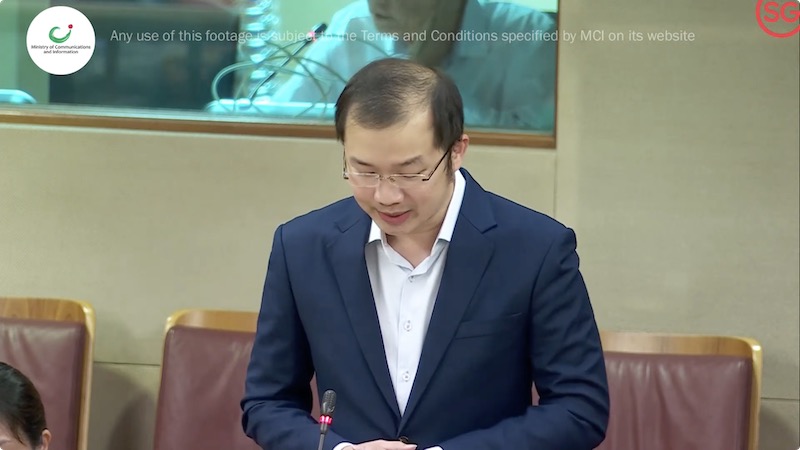
Mr Speaker, I welcome the move to repeal Section 377A of the Penal Code. For too long, the law has remained in our statutes explicitly stating that sex between adult men is a crime, even if it is consensual and done in private.
Despite the Government having said multiple times in the past that it will not enforce the colonial-era law, and with the Court of Appeal ruling earlier this year that Section 377A was unenforceable in its entirety, its existence has very real repercussions that affect many of our fellow Singaporeans, their families and their loved ones.
The topic of this debate is a complex and multifaceted one, with individuals, including Members of Parliament, holding deep personal convictions. Yet beyond the bills and clauses themselves, we must also be cognisant that the issues we are debating have far-reaching effects into the personal lives of our fellow Singaporeans.
It is on this note that I wish to touch on some aspects of the lived experience of our LGBTQ community in Singapore, which may be less apparent to those of us who are not from within the community.
I am a young father with a loving and happy family. Section 377A never really bothered me in any way that I live my life. But over the years, I have gotten to know several members of the LGBTQ community, some of whom have become my close friends. The daily struggles they face regarding their sexual orientation and gender identity are very real.
We all live in a largely heteronormative world. For my LGBTQ+ friends, that means they constantly face subtle judgement, discrimination, apathy and hatred even towards them at home, at school, in the military and at work. Seemingly nondescript questions of, bring your girlfriend to drinks next time, or where's your husband, or do you plan to have kids, can come up suddenly at family gatherings or happy hour drinks at work and make them squirm.
Think about those awkward Chinese New Year conversations that you have with distant relatives at various stages of your life, be it when you are single, married but without children, or even married with one child and replicated throughout the rest of the year. These questions become even more damaging especially when they are unsure of how others would react to their true sexual orientation or gender identity and potentially affect their opportunities at work and in society.
So some choose to hide their true selves and avoid talking about who they are dating or their hopes and dreams to lead a stable life. They stay hidden from society. Some choose to be public about it, but fear the risk of being punished for their choices by not being considered for promotion at work or being bullied at school.
In some form or another, individuals who identify as LGBTQ+ have to cope with additional mental and emotional stress, and in some cases, physical abuse just for being someone they were born as. Mr Speaker, it has been well documented that LGBTQ+ individuals are at a higher risk of depression and mental and physical health dangers. Some suffer from internalised homophobia where they loathe themselves over a sexual orientation or gender identity they had no choice over.
A recent NUS public health survey found that among 570 sexual minority young adults aged 18 to 25, 59% had contemplated suicide and 14% had attempted to kill themselves. Having 377A in our laws means that it is hard to organise support groups to help not just members of the gay community, which is who the law targets, but also the wider LGBTQ+ community who face discrimination, bullying or mental struggles just for being who they are.
Schools and companies may think twice about setting up official LGBTQ+ groups or at least show overt support in counselling and supporting these individuals. Let us not forget the unfortunate incident from earlier this year where a school counsellor himself presented content discriminating against the LGBTQ+ community before being suspended from all duties pending investigations.
The fact that there remains a legal route for prosecuting LGBTQ+ persons has a specific sanction chilling effect on the community. Retaining 377A also makes Singapore look anachronistic, especially in light of our Asian financial hub status. Hong Kong's Legislative Council passed legislation decriminalising homosexual acts in 1991. China repealed similar laws in 1997. Japan briefly made homosexuality illegal and then repealed the law during the Meiji era. Homosexual acts were never a legal issue in Taiwan, while in India we also share similar colonial roots to Singapore struck the law down in 2018.
Having 377A made it challenging to convince prominent members of the LGBTQ+ community, Singaporean or otherwise, in the arts, financial sector, tech and many other areas to remain in Singapore and make meaningful contributions to our society and economy. The LGBTQ+ community's joy of seeing 377A repealed would have been greater if not for the fact that the move merely puts Singapore more in line with other cosmopolitan, open and inclusive societies.
In addition, retaining a law that isn't actively enforced or cannot be enforced sends a confusing signal on how one should comprehend Singapore's legal system. It also means that there is always a chance that a future government may attempt to prosecute a man for sex with another man that was done in private and consensual. That is why I applaud the government's move to repeal Section 377A.
Some will know that my colleague and fellow Sengkang GRC MP, James Lim, attended the Pink Dot rally this past June in his personal capacity. As shared in the media release for Pink Dot 14, we are living in an increasingly divided world. The ability to reach across the spaces between us for dialogue, co-created understanding is what will keep us safe.
Mr Speaker, the issue of repealing at its core is not a political one but one that grants dignity and freedom to a marginalised section of Singapore. I am glad that society is indeed ready to move on and repeal 377A. But repealing 377A doesn't mean discrimination towards the LGBTQ community disappears overnight. Discrimination against such individuals still exists in Hong Kong, China, Japan, India and many other jurisdictions where gay sex isn't illegal per se.
On the constitutional amendment that is being proposed, the message that Singapore sends is quite clear. The idea that marriage is only between a man and a woman and this is a decision that will be left for the legislature and society to decide and not by the courts. For the geographies that I mentioned earlier that have repealed discriminatory same-sex laws, that discrimination still exists is a reminder to us that social acceptance is crucial to any landmark legal or constitutional changes to maintain harmony and stability in society.
As such, I do recognise the importance of the signal the new Article 156 sends to provide greater protection for the definition of marriage and its related policies today. After the Prime Minister's announcement at the National Day Rally, MCI said that media policies on homosexuality will remain, which means as a Toy Story fan who has enjoyed the entire Toy Story series since 1995, I can't bring my children to watch Lightyear, a Pixar animated children's film due to overt homosexual depictions, as though homosexuality is unspeakable and cannot be seen.
MOE said that the education curriculum will still be focused on what majority of society supports, which is family between a man and a woman. But at the same time, we need to be conscious of LGBTQ+ individuals being invisible in our curriculums.
It will take time for society to come together and, as shared by Leader of the Opposition Mr Pritam Singh, create conditions for all Singaporeans to succeed and certainly not to feel marginalised, where we are tolerant of Singaporeans who are different in as far as the law allows. But it's all the more important for us to understand each other's viewpoints, stay civil and respectful as we engage all members of society as Singapore becomes more inclusive and open.
I had the privilege of hearing from one of our LGBTQ+ advocates recently, and she is a household name who needs no introduction. Ms Theresa Goh shared her incredible journey as a child born with spina bifida to becoming our first female swimmer at the 2004 Athens Paralympic Games, winning gold at the 2006 IPC World Swimming Championships and bronze at the 2016 Paralympic Games. More recently, she has also been elected as one of 10 members of the Singapore National Olympic Council Athletes' Commission.
While we know her for her extraordinary achievements, what is less well known was the struggles she and her family had to go through as a disabled person and a queer woman here in Singapore. What was particularly heart-wrenching to me was hearing her speak so casually about the difficulties her parents had in searching for a kindergarten for her back in the 1990s, as they faced repeated rejections the moment the kindergartens found out that she had a disability. She shared that there was even one day when she was not feeling well and threw up after lunch, and yet her teacher did not help to clean her up. But she felt that, had she been any other normal child, her teachers would have cleaned her up before her parents came to pick her.
It is upsetting to hear of such experiences, but I also take comfort in that such behaviour would be completely unacceptable and unthinkable in today's circumstances, and we as a society have moved to become more accepting of the disabled since the 1990s. Today, however, LGBTQ+ inclusivity remains a frowned upon topic. As late as 2017, when Theresa shared about how she decided to come out in an interview with The Straits Times, she was particularly afraid of how other people would see her, and how they would react. At home, she was worried that her parents in particular would take this news badly. However, they reassured her that all they want is for her to find somebody who would take care of her, whether that person is a boy or a girl.
While Theresa's story has a happy ending, another close friend of mine is still facing challenges in broaching this topic with his parents. As an only son, he has been extremely filial to his parents, and shares a very special bond with them. A number of years ago, he felt that he no longer wanted to hide his sexuality from his parents, and wanted to be completely honest with them, as he has been with every other aspect of his life. This was not taken very well, unfortunately, with his mother feeling distraught that there was something wrong with her son, and even prays at the temple regularly with the hope that one day, he will be normal again. I pray that one day, his parents will accept him fully for who he is.
Mr Speaker, let me draw on what I see in the finance sector where I work. Many financial institutions encourage their employees to bring their true selves to work, because they believe that only then they can be truly engaged in what they do, and fully develop their passions. Many banks see being open about being who you are can make for a more productive workforce. They have clear DEI, or Diversity, Equity and Inclusion Talent policies. Incorporating DEI into business operations has been proven to benefit companies' performance, because it encourages a wider range of views and opinions among staff. All these have clear measurable impact, and should equally apply to our country and economy too. We place a very strong emphasis on developing everyone's potential.
A survey by YouGov in May 2022 on behalf of LinkedIn shared that 75% of LGBTQ+ professionals indicated that it is important that they work at a company where they feel comfortable bringing their full selves to work. And 49% indicated that they will not work at a company that does not have LGBTQ+ family-friendly benefits. Similarly, a Deloitte survey of 600 members of the LGBTQ+ community across 12 countries showed that over 70% of its respondents are more inclined to remain with their current employer because of its approach to inclusiveness, while 37% of respondents indicate that they are actively considering changing employers to find one with a more inclusive culture.
Every individual in Singapore should be able to contribute in their fullest capacity without fear of being discriminated against for who they are, be it over race, language, religion, sexual orientation or gender identity. Only then can Singapore be truly a global, cosmopolitan, harmonious home that we can all be proud of.
I have a male friend who married his partner of seven years just before the pandemic in New York. The two men are in a loving relationship but there is just one snag – my friend is an only son. When he is old and bedridden, he wants to know that he can trust someone to make difficult medical and legal decisions for him. All they hope for is that there is at least a jurisdiction out there that can give them society and legal guarantees that straight couples enjoy. That is why he married his partner even though he knows that their marriage is not recognised in Singapore.
I support the repeal of Section 377A and the Constitutional Amendment Bill.