← All speeches
28 November 2022
Lim Biow Chuan
Speech at the Section 377A and Constitutional Amendment Debate
Mountbatten, PAP, MP
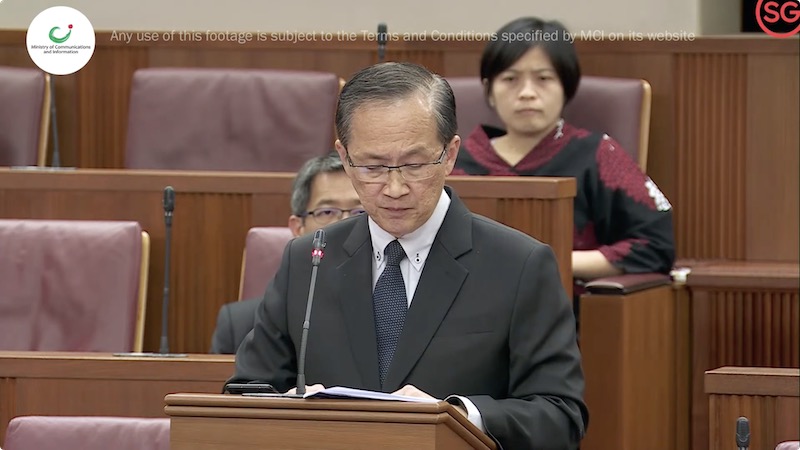
Sir, in 2007, when nominated MP Mr Siew Kam Hong petitioned to repeal Section 377A of the Penal Code, I spoke to support the Government's position of retaining Section 377A. I argued that Parliament should make laws to reflect the public morality of our times. The messaging by the Government is important. Singapore is a society whereby the family unit is still seen as a basic structure of society. Further, the Government had indicated that there will not be proactive enforcement of those who are gays.
At the time, PM Lee had said that the Government has decided to keep the status quo despite the legal untidiness and the ambiguity. PM Lee said, it works, do not disturb it. It works, do not disturb it. Thus 15 years later when PM Lee made his announcement during the National Day rally in August that the Government intends to repeal Section 377A of the Penal Code, I was taken aback.
What is the intended signal by the Government when it announced its intention to repeal this law? How do we explain to the many Singaporeans who are still pro-family and worried about the potential decline in family values? I spoke to many Singaporeans who expressed their concern about the repeal. Many of them said they do not wish to see homosexuals being prosecuted as criminals. But yet, they are concerned whether the repeal will lead to an erosion of family values and an increased number of gay people.
I believe many MPs in this House have received letters from concerned residents who expressed similar concerns. To keep an open mind about this issue, I also spoke to different groups of citizens who felt that we should allow those who are homosexuals to live the lifestyle that they wish. They opined that it is not the Government's business to tell our citizens, especially those who are gays, how to lead their lives. While some expressed concern about the open expression of homosexual relationships like hand-holding and public kissing, they felt that there is no need to make this behaviour a criminal offence.
Hence, it appears that the advocacy by the homosexual community over the years has made our citizens more accepting of the gay people. There are also a number of citizens who felt very neutral about the matter. They have no views on the issue at all. In other words, it is not their concern.
In 2007, I said that the majority of Singaporeans do not condemn a homosexual or a gay simply because of his lifestyle, nor do they wish to criminalise a homosexual. Minister Indranee Rajah, when she was a backbencher, had also in her speech said, I think we do not want to have a situation where we demonise homosexuals. We certainly do not want to regard them as anything less than Singaporeans. The Government's stand at that time was articulated by PM Lee when he said, there are gay bars and clubs. They exist. We know where they are. Everybody knows where they are. They do not have to go underground. We do not harass gays. The Government does not act as moral policemen, and we do not proactively enforce Section 377A on them.
Since the Government does not actively enforce Section 377A on homosexuals, the question is whether it is time for Singapore to repeal Section 377A today. Is the Singapore society more accepting of homosexuals in our midst? Will the repeal of Section 377A mean that a family is no longer the basic building block of society?
Sir, the introduction of Article 156 relating to the institution of marriage has given me great comfort. It reinforces the Government's stand that the definition of marriage and laws to protect, safeguard, support, foster and promote the institution of marriage should be for Parliament to decide, and that Parliament's power to make such laws on marriage cannot be challenged under Part 4 of the Constitution to be discriminatory. It gives assurance to many Singaporeans that the repeal of Section 377A will not lead to a drastic shift in societal norms.
So I am also heartened by the commitment made by PM Lee and DPM Lawrence Wong that there will not be any change in the definition of marriage during their watch. After speaking to many Singaporeans across a wide spectrum, I have concluded that it is time to repeal Section 377A. Many Singaporeans have accepted that homosexuals are fellow Singaporeans living in our midst and doing their part to contribute to Singapore. Societal norms have changed over the years. In particular, many of the younger generation are accepting of the homosexual people. And similar to the position of many Singaporeans, which I alluded to 15 years ago, we do not wish to see homosexuals being criminalised.
But the message that I heard from many Singaporeans is that we need to protect marriage as a union between men and women, that we need to support values that promote the role of the family as a basic building block of society, that we need to protect Singaporeans from being intimidated or harassed simply because they disagree with the lifestyle of the gay community. Many within the religious community are also concerned whether the repeal of Section 377A would lead to a situation whereby the religious leaders cannot tell their congregation that they do not agree with the practice of homosexuality. The religious leaders are concerned that they cannot pray for someone who is homosexual to reflect on God's command.
In other words, the religious leaders lose their freedom to preach on what is acceptable or wrong based on their faith. And that's their concern. So there are also many who express concern about intolerant views of some gays who attack anyone who disagrees with their homosexual views. There are fears about the activism of some of the LGBT community who push their ideology, that their worldview should be seen as a norm and acceptable. Therefore, anyone who disagrees with their worldview should be condemned and ostracised.
In Australia, when the government held a poster poll on same-sex marriage, it resulted in vitriolic abuse against people holding views in opposition to the legalisation of same-sex marriage. An Australian politician said, A culture has developed whereby it is acceptable to vilify, mock, abuse and shame anyone who stands in the way, or even raises questions about whether we should legalise same-sex marriage. I have been called a homophobe, a bigot. I have been told that my views are disgusting, so said the Australian politician. And when such strong and intimidating language is used, it is impossible to hold a civil debate or respectful discussion about any topic regarding the gay community.
So I met with the organisers of the Protect Singapore Town Hall. They told me that their town hall meeting was almost cancelled because of complaints and threats by the gay community. So they complained that the minority in the gay movement are refusing to allow anyone to have a conversation about their concerns regarding homosexuality. So I think this is sad because many homosexuals that I know are very decent people, and I have deep respect for such people because their sexual preference is really not an issue to me. But because of this small minority of militant homosexuals, they give the others a bad name by being bullies and by being difficult in their conduct.
So I have also received feedback that employees in international organisations or MNCs located within Singapore, they are harassed in their workplace if they do not support the gay beliefs or if they refuse to attend a pride event. Thus, it seems that there is reversal of role. It is not the gays who are being discriminated in Singapore. On the contrary, if you do not agree with the pro-gay movement, you may be penalised at work or face discrimination. And likewise for students studying in international schools, they are asked to take part in gay team projects as if it was part and parcel of the school curriculum.
So I urge the Government to look into this to ensure that no organisation, company or school in Singapore can compel their staff or students to participate in gay community projects if they do not subscribe to the same values. I submit that every organisation, company or school must have the scope to allow their employees or students to subscribe to different views on sexuality without being discriminated or having to receive hate mail.
I also urge the Government to consider legislation to make it an offence for anyone to put out hate messages or derogatory comments just purely to intimidate others into keeping silent. And this law should apply equally to those who are anti-gay and those gays who seek to bully others into silent submission. So there should be no space for people to propagate hate messages within Singapore. Let me say that again. There should be no space for people to propagate hate messages within Singapore.
Even as we move to repeal Section 377A, I hope the Government will also make clear its stand that our policies on sexuality education in schools, our content guidelines for publications, for video games and various types of media will remain pro-family. That we will not see a proliferation of materials, video games or media advertisements promoting the gay lifestyle. That we will not have laws that allow individuals to remove their gender in their NRIC or passport. And that the Government will remind all organisations, companies and even embassies operating in Singapore that we are still a society that values family as a building block of society.
So I support the repeal of Section 377A of the Penal Code and the amendment to the Constitution to insert Article 156 to the Constitution. Thank you.