← All speeches
28 November 2022
Hoon Hian Teck
Speech at the Section 377A and Constitutional Amendment Debate
NMP
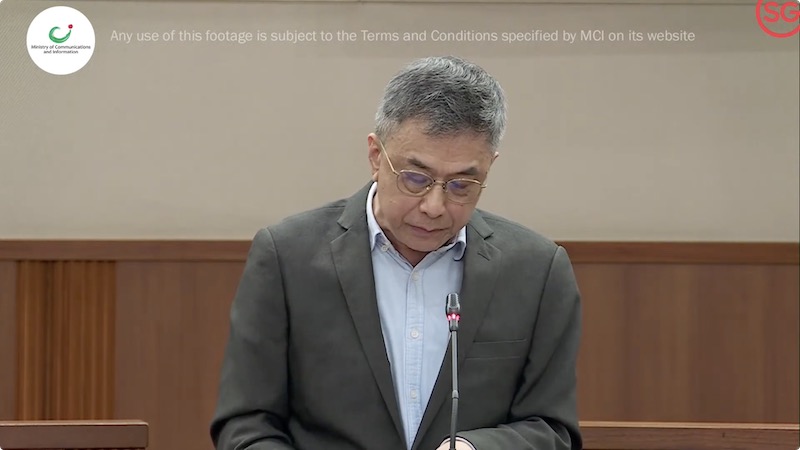
Mr Speaker, sir, each individual functions within a society. So there is a place for public debate about the laws and institutions which we would want to have in order to regulate life within that society. At one level, I believe that this debate is about whether the family, defined as a marriage between a heterosexual couple and their parenthood, is the unit that forms the basic structure of a well-ordered society.
Children are born into families and develop their complete lives with the investment of their parents who gave birth to them. If we view the family as justified, as part of the basic structure of society, then we would want to have laws and institutions that support that family. We would want to strengthen this social norm and support the public commitment made by a man and a woman to be married to each other and to raise their children within the safety of their wedding vow.
Playing their complementary roles, fathers and mothers raise their children who contribute to the orderly formation and further reproduction of society over many generations. Research shows that the cognitive and the social-emotional skills that are acquired in early childhood and that their development is very much shaped by the family environment.
While it has to be acknowledged that there are major challenges that couples will have got to tackle in order to keep their marriages healthy and to provide the best environment to raise their children, our laws and institutions must help to strengthen a culture where husbands and wives give priority to building strong families. Even when couples are economically disadvantaged, public policy through early interventions in their children's lives can help to improve social mobility. Society can then uplift the quality of life for future generations of citizens by supporting the husband and wife in their child-rearing activities.
China has made a transition from an economy built around factories that produce standard labour-intensive goods for sale into the world market to one that is more service-oriented and where the Fourth Industrial Revolution will require workers to exercise a wide range of both cognitive and non-cognitive skills. In such an economy, I believe the family remains the bedrock of society, where children born and where children learn complementary lessons from their fathers and their mothers so that they develop the skills needed to become well-functioning future workers.
We take for granted that, as our parents have invested in our lives, it is our responsibility to provide care for them when they become old. That responsibility is shared amongst siblings. Even when there are failures in particular cases, we hold as examples those who inspire us with their devotion to duty, to the care of their ageing parents. While the government, through its public programmes, provides assistance in various forms, much of the glue that holds a society together comes from the constituent members within the family.
We should want, in instituting our laws, to convey, through all means possible, the gratitude we feel for the complementary roles that our fathers and mothers play in raising us to become well-functioning adults. Departing from this norm of what constitutes a family, I believe, leaves us in uncharted waters.
Mr Speaker, sir, the government has reiterated that it has no intention to change the tone of society. It also affirms, I quote, the family as the cornerstone of our social fabric and marriage between a man and a woman. A strategy to redefine what constitutes a family, from what the government has reaffirmed as marriage between a man and a woman and their parenthood, involves taking sequential steps to progressively bring about change.
In many historical cases around the world, where the structure of the family has been changed from the norm that the government has reaffirmed, legislative changes have indeed taken place sequentially, beginning with the decriminalisation similar to the repeal of the law we are discussing today, to subsequently defining the family in a very different way, from the basic structure the family does mention. These changes, these legislative changes, make the definition and institution of marriage both contingent and subject to change.
I believe that not repealing the law acts to bolster the achieving of the aims of the government, to keep the family form out of a marriage between a man and a woman as a cornerstone of our social fabric for as long as possible, in the face of the many challenges to such an understanding of the family as the unit that forms the basic structure of society. I believe that keeping the current law serves to provide an important marker to preserve the present structure of the family and its supporting institution.
I believe that it is best not to repeal the law.
Thank you.