← All speeches
28 November 2022
Henry Kwek
Speech at the Section 377A and Constitutional Amendment Debate
Kebun Baru, PAP, MP
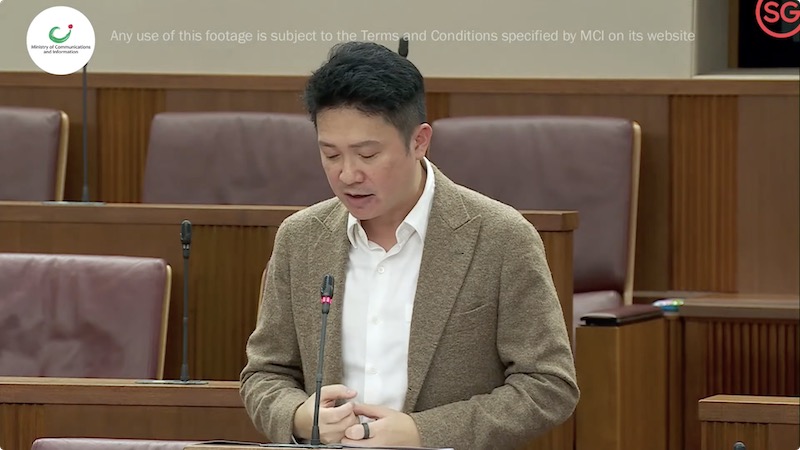
Mr Speaker, Sir, I stand in support of the amendments proposed today. Our society has evolved over time and part of it can be attributed to our youth today. Therefore, I believe I can best contribute to the debate by highlighting their views.
Most of our youth want 377A gone because it suggests that some Singaporeans are less than others. The views of our youth are not solely attributed to the influx of work culture from the West. There is a more fundamental reason, and that is for the past few decades we have been building a kinder Singapore. Our schools have taught our children and youth the value of justice, empathy and kindness. Naturally, our youth believe that the dignity of every Singaporean matters. Therefore, we should not be surprised that our youth think that the provisions of 377A are innately discriminatory, even if they are not enforced by the Government.
So should we be surprised that our youth can empathise with the lived experience of the gay community, some of whom have experienced real or perceived discrimination? No, we should not. At the same time, while our Singaporean youth respect diversity, they also continue to uphold the sensibility of a traditional society. They are pro-family and most believe marriage is best defined as between a man and a woman. Therefore, with regards to family, the views are not that different from the generations of Singaporeans before them.
Most of them have grown up with loving parents, grandparents and under the nurturing shade of our family-centric policies. They therefore intuitively understand the importance of families, not just for themselves but also for society. At the same time, many youths also wondered why it took society so long to repeal 377A. However, they have now observed the painstaking consensus-building effort needed to move Singapore along. And because our youth can empathise with differing viewpoints, our youth now have a deeper sense of understanding of how a more traditional Singaporeans feel.
Therefore, I believe that most of our youth will support the amendments proposed today. To sum up, our youth does not see the repeal of 377A or their belief that all Singaporeans matter as contradictory to their pro-family stance. Their views are reasonable and we should listen to them.
Next, I would like to talk about how we can best support our youth on this issue, especially on the one hand our youth who are gay and worried that they will be ostracised and on the other hand our youth who are worried about being cancelled for voicing in a respectful manner their traditional family values. Indeed, we must take pains to ensure that our schools remain neutral on this issue and support both types of youth in an effective and low-key manner. I have observed that for a minority of youth, there is a certain fluidity in gender self-identification. A youth might identify himself as gay at a certain age but have a different take years later. And the reverse can also be true. Therefore, our schools should neither celebrate or ostracise our youth for being gay. Our schools should not let gender become the defining attribute of who a person is because if this issue gets polarised, we will be robbing them of opportunity to do an authentic self-evaluation in their formative years of who they truly are. We must also remember that for a small country, if our children and youth are fiercely divided along any issues and then they grow up within the confines of those fault lines, the divide is not just ideological. It can get deeply personal. Remember we are a small country. Frequently, the divide will have a human face attached to that divide.
And in my discussion with many teachers and school leaders, I believe our primary, secondary school and JC leaders have done a good job in keeping our schools neutral. They have taken a child-centric approach to providing quiet and effective support to our youth. And compared to other countries, they have been quite successful in preventing educators from injecting their personal agenda into the classroom. But it has been a while since we have last debated on this issue, so it is best if MOE can remind our school leaders and teachers on this and Singaporeans will also appreciate it if MOE can reiterate their firm stance on this matter. The situation in our tertiary institute is more complex. At that age, our youth are at the discovery stage in their lives and our educators have a lot less influence over the students. Therefore, I hope we can consider legislations moving forward to prevent cancer culture from taking root in Singapore.
Let me now conclude, Mr Speaker. I stand in support of the proposed amendments because they are the result of a painstaking consensus-building effort, thereby cementing our common ground into law. And also because they refresh our social compact on gender and marriage for the years ahead, thereby addressing the very reasonable concerns of more traditional Singaporeans, and because it helps us move Singapore forward. Thank you.