← All speeches
29 November 2022
He Ting Ru
Speech at the Section 377A and Constitutional Amendment Debate
Sengkang GRC, WP, MP
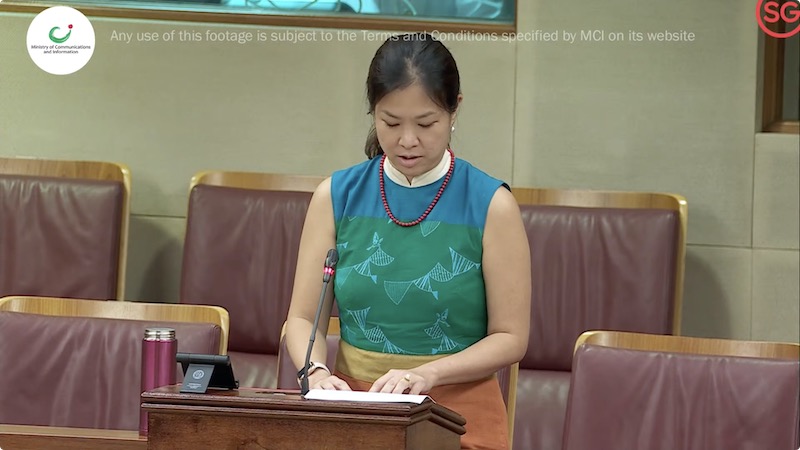
Mr Speaker, like many of us in this House, I am often filled with questions about the type of world we live in, and the world that I want my children to inherit from us. I worry about how I can inculcate in them the right values, the right tools to be able to dissect tricky situations and to be able to tell right from wrong. Today my sons are still young, and it will be years yet before they are old enough to understand the topics we are debating. However, I hope that when they are old enough, they will be able to understand and appreciate what I say here today.
These are topics that are fundamental to who we are as individuals, who we are as a society. It comes as no surprise that we have many different viewpoints, and that some amongst us do feel extremely passionately about the issues involved. This is a good thing in and of itself, as it shows that we care deeply about the society we live in.
When the repeal of Section 377A and the amendments to the Constitution were first announced, my thoughts were initially clear-cut. Yet as I listened to friends and residents who shared their thoughts with me on the matter, I realised that there was a wide variety of opinion on the matter, each informed by one's own life experiences, their own social or religious value systems. It would also be impossible to find a position that everyone fully agreed on. But, whether they are for or against repeal, one thing was clear to me, that everyone is motivated by the same desire to see Singapore move in the right direction.
I think it is crucial that we do not lose sight of this, even as we may debate over what the greater good is. This is important because having many different cultures, values or viewpoints is not new to Singapore, and it will not be the last time we face an issue that risks our society becoming increasingly polarised. But I am reminded that we can face challenges as a nation, and can do so soberly, in a way that balances the individual's right to hold their own beliefs and practices, with the need to build a cohesive society founded on principles of understanding and acceptance.
It is also not lost on me that I am speaking today not just as an individual, but as a representative of my constituents who have entrusted this privilege to me and my teammates. This is something that we will never take for granted, even as we strive each day to be worthy of that trust. But Sengkang, like Singapore, is multi-faceted, and as interests and viewpoints are split on 377A, I believe we need to remind ourselves of the same principles of acceptance and understanding that have helped us build a strong ship that can weather difficult storms.
I believe that we must have empathy and put ourselves in the shoes of those who hold different views from us, and to try our very best to understand where the concerns are coming from. We must approach this difference with respect. It does not do anyone favours to dismiss the other as being hysterical, overblown, or wanting to impose corrupt values on others. We must, above all, work to not discriminate against our fellow citizens.
It is this principle that moves me to vote in support of repeal today. I do not believe that we should have a law in the books that is plainly and obviously discriminatory. It sends a signal that one segment of society is so morally reprehensible that their identity should be considered criminal, even if it is only on paper. It excuses discriminatory behaviour and contradicts the pledge we take as citizens of Singapore to build a democratic society based on justice and equality.
Not repealing Section 377A today would be at odds with steps that Singapore is taking to be a fairer and more equitable society for all, and will go against the principles behind the Government's welcome announcement that we will finally legislate against discrimination.
Many in this House have already mentioned the Government's announcement to introduce anti-discrimination legislation, and I believe that the repeal of Section 377A plays its part in our move towards a more inclusive society.
Some residents and concerned citizens have written to me to express concerns about the repeal of Section 377A and the deleterious effect that this will have on the next generation. Having three young and curious children myself, I fully appreciate where this is coming from. And indeed, I often find myself worrying about how to teach them to know right from wrong, and to be able to distinguish between good and bad influences. After all, we cannot completely insulate them from the outside world, and our children will be exposed to many different ideas and arguments which we believe are wrong. Our role as a parent is to educate, to guide them as we think fit, and to have a sense of moral values which they can then apply to different situations. Yet, our children are also their own people, and we must accept that they too will eventually grow up to have their own views, make their own choices, and to deal with the consequences of their actions.
And while it is true that a country's laws do provide some moral guardrails for what is acceptable to society as a whole, history has shown us that in some instances, this has not always been the case. After all, I like to think that if I lived in a time and society where slavery was legal and accepted, I would still teach my children that the very concept of a human owning another human is abhorrent and unacceptable under any circumstances.
Having said all of this, I have also heard and understand the concerns of those who feel that the repeal of Section 377A will be a slippery slope to further shifts in policy that they feel are simply unacceptable, or that its repeal would cause deep faults and divisions in society that are irreparable. I understand and respect their concern, but since as early as 2007, the regard for Section 377A as a bad law has been growing. Legal personages, including former judges of the Court of Appeal and a former Chief Justice, have cast doubt on its constitutionality. Other arguments have been made in this House before as well.
If not today, the law would likely have been struck down in the near term. But we must also not mix legality with morality. The repeal rejects a legal framework of discrimination, but parents remain able to educate our children and impart the moral lessons that we want within our household, shaped by our own beliefs and faiths. The concerns relating to the silencing of certain groups are also, I believe, understandable.
However, Article 15 of our constitution guarantees the freedom of religion in Singapore, specifying that every person has the right to profess and practise his religion and to propagate it. This right has been upheld by the Court of Appeal. And if there should be any proposed amendments to remove or water down the right to religious freedom in Singapore, I will not hesitate to oppose it.
In fact, this approach is similar to thorny moral questions that are handled differently between religions or communities today. Yet our laws are secular and don't attempt to enshrine the moral compass of each group. Our laws seek instead to provide the protection for each community from discriminatory treatment from another. The same principle applies here, and the protection of religious freedom will remain a core tenet of our democracy.
With this in mind, I record my concern about the proposed constitutional amendment before us. I appreciate the concern behind its formation. Yet from a legal perspective, the proposed amendments carve out an area of legislative decision-making and functionally shield it from judicial review. Specifically, the proposed Articles 156, 3b and 4 prevent laws and policies relating to the heterosexual definition of marriage from being challenged in the Court on the basis of the fundamental liberties provisions in the Constitution.
This causes me some concern. While I can understand and appreciate that the majority of Singaporeans feel that marriage is between a man and woman, and share the concern about a judiciary running roughshod over the will of the people as expressed through Parliament, I note that the Singapore courts have always been conscious of the concept of parliamentary sovereignty, giving precedence to the lawmaking function of Parliament, and are ever cognisant of not overstepping the line into judicial lawmaking.
Perhaps in taking fright at the phantom menace of judicial activism, we may be losing sight of a more fundamental principle, that the judiciary should be the ultimate arbiter of the constitutionality of legislation and has an important role in safeguarding the fundamental liberties protected therein. Article 156, while not an ouster clause in the traditional sense, functionally shields legislation from being tested against the protection of fundamental liberties under Part 4 of the Constitution.
This concern goes beyond the present issue, and I hope we will not lose sight of the bigger picture. If we were to pass the constitutional amendment today that prevents the courts from determining the constitutionality of a legislative policy, what would stop a future Parliament from passing discriminatory legislation and then shielding it from judicial oversight?
For example, a future Parliament may decide to pass or entrench laws that prevent the propagation of one's religion and then immunise that from court challenge on the basis of the constitutional protection for religious expression by introducing a carve-out similar to the present amendment as contained in Articles 156-3 and 4.
I would additionally urge empathy when debating and passing the constitutional amendment. While I applaud removing the divisive thorn of Section 377A from the body politic, I worry too that the constitutional amendment may continue to advance the divisiveness that we precisely want to combat.
Although I understand and appreciate why the Government has introduced a new Article 156, I find that I must abstain from the amendments proposed to the constitution due to my concerns relating to the carve-out from judicial oversight.
Finally, the divergent views on Section 377A underscore the need for measured dialogue, for opportunities to walk in the shoes of another, to not view fellow Singaporeans as an existential threat and to not underestimate the good sense, resilience and pragmatism of the Singaporean people. For a pluralistic society like Singapore, it is in walking together, in conversation with each other, all the while cognisant and respectful of our differences, that we are able to move forward. Sometimes legislation is not just the imperfect substitution for society's greater good, it can be a barrier to it.
I have been speaking about principles and ideas in the abstract, so allow me the liberty to close with a personal anecdote. I grew up with a boy from this part of the world, and we moved to different cities when we were teens and didn't see each other for almost a decade. One day our paths crossed again and we were chatting about nothing in particular. I made a teasing comment about whether he would take girls to a particular spot to impress them.
What followed next was totally unexpected. He suddenly grew quiet and paused for a long while, looking away. I could see that his mind was racing and he swallowed hard a few times. Finally he looked at me and said, "You probably don't know this, but I am gay." He said he thought a long time about whether to tell me, but decided to do so because he thought I'd be okay with it.
I was silent as he started telling me about how a few months ago he attended his sister's wedding, where he felt compelled to tell lie upon lie to well-meaning relatives, asking when would it be his turn to get married. He felt like a charlatan, but overriding this was his greatest fear that he did not want to bring shame upon his parents.
I will never forget the fear and anguish and the pain in his eyes and the regret that this was not the first nor the last time I saw these emotions as someone came out to me about their sexual orientation, all because they feared condemnation and disgust for who they were.
We do not have to condone it nor encourage it, but I hope we can find it within ourselves to try to empathise with them even just a little bit. That we can find it within ourselves to be able to live and hope and pray that LGBTI members of our community are able to live without discrimination and fear of being ostracised.
Conversely, those who support the repeal of 377A or even feel that we should go further should also not attempt to bludgeon their views upon those who are deeply uncomfortable with it and instead try to understand the reasons behind why they feel this way. This will be a start towards better understanding each other and how we can begin to heal any rifts that may have arisen.
After Section 377A is repealed, life will go on. Families and spouses who love and value each other and their children will continue to do so. Love and hope can still triumph over anger and mistrust and we will still open our doors and hearts to our neighbours in the community who need an extra helping hand. This is what makes us a nation as one nation and I hope we never lose sight of this nor stop fighting to keep this as our shared future.
Thank you.