← All speeches
28 November 2022
Cheryl Chan
Speech at the Section 377A and Constitutional Amendment Debate
East Coast GRC, PAP, MP
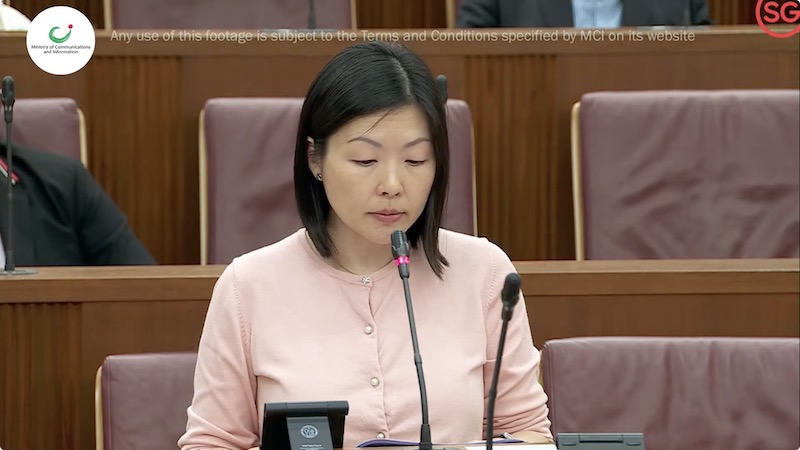
Mr Deputy Speaker, in our 57 years of independence, Singapore has prided ourselves on being a multi-racial, multi-religious country. While diversity exists, we have learnt to respect and allow different individuals to practise their faith, beliefs, traditions and religions. All this is possible because first, we have intentional policies in place to enhance behaviours which are widely acceptable, or discourage certain behaviours which are less accepted. Second, we learnt to respect one another from the values we learnt or that are taught in school and at home. Third, we define over time the country we wish to live in and the societal behaviours that most consider as norms. This is the basis I believe have bonded us together and enabled us to live in harmony thus far.
But beneath this social model, there still lies frictions and differing views in our country. Some of these frictions or differences are not easily solved or appreciated by different groups as it is not simply an assessment of right or wrong, nor is it about the louder voice triumphs. Especially not so when it comes to one's preferences, liberty of choices and how one can make others understand their views and accept it without having broader societal impact. If only things were as straightforward, there would be hope of reduced conflicts and more peace today.
As it is with any evolving society, when the exposure to different spasads of life becomes wider for most individuals, the reality is we are faced with a gradation of expectations and perceptions from the family, friends, co-workers and society. For us to move forward as a country, there needs to be more ability in us to actively hear different viewpoints, be less biased beginning with a lesser extent of prejudging people, and for activists not to plainly impress one's agenda on others to accept regardless of others' preferences and values.
How then can we achieve a calibrated balance between one's beliefs and practices without imposing on others? I believe this boils down to the values that define each of us and what we are prepared to accept and adopt in our lives. There are values which are considered key tenets of a society's mainstream, those which most can accept and acknowledge as norms. These values are those where people freely express and are naturally accepted without being judged. However, we must also recognise that there are other values which serve some unique groups, or serve some purposes or being adopted by some, but are not commonly observed amongst our daily lives. This is where management of social expectations and perceptions play a role.
Personally, I was raised on the values where family centricity is key, one where marriage is defined as between one man and woman. This is what I also wish to see remain as the beliefs, teachings and practices in our education system. While I think many may share this view, we should not be oblivious that our next generation will not have access to information that influences them about homosexuality or sensitive topics, just because it is not taught or spoke about in mainstream schools. By not having it as mainstream, we can at best defer the exposure of our young ones to a later stage, when they are more mature to differentiate or make sound decisions independently.
Thus, I firmly believe that to repeal 377A, it must be done on the grounds where the recognised legal union between a man and woman is also strongly protected by the definition within the Constitution. While now we can take reference of this in the form of Article 156 if it is passed, we must ensure that the Government stands by this firmly as we consider any future amendments to the legislations or even the repeals. Particularly so for ours, as many of today's legislations are designed with the family unit being the fundamental social fabric. Take the housing policy as an example. Today, the HDB public housing can be purchased or rented by those who have a family nucleus. The housing demands come from many groups besides those with a family nucleus. These groups include the unmarried singles, single parents with or without children, lone seniors and more. They too have a need for basic housing, but the applications are currently either limited by conditions or considered on a case-by-case basis.
Hence, this brings about the question of fairness if the definition of family nucleus for married couple changes. For a need as basic as housing, this becomes a tricky situation. Whom then should be given access to public housing and in a timely manner?
Sir, what may not be a social norm today that is publicly expressed and accepted does not imply that it cannot be privately practised by various groups who adopt it as their way of living. Similarly, this also does not indicate that those who do not believe or adopt it should ostracise individuals who are different from themselves. Every family, every community, every individual have the right to choose what is comfortable for their lives. But as individuals, regardless of our beliefs and inclination, we should not impress upon others that they must embrace our way of living.
With time and ability of individuals to perceive different norms, the values of what defines us as a society will naturally surface. Thus, sir, I believe that let us not allow divisive voices to break us apart, but rather for us to consider when and how we want to be inclusive while maintaining our own beliefs and values. Thank you.