← All speeches
28 November 2022
Baey Yam Keng
Speech at the Section 377A and Constitutional Amendment Debate
Tampines GRC, PAP, Senior Parliamentary Secretary, Ministry of Sustainability and the Environment & Ministry of Transport
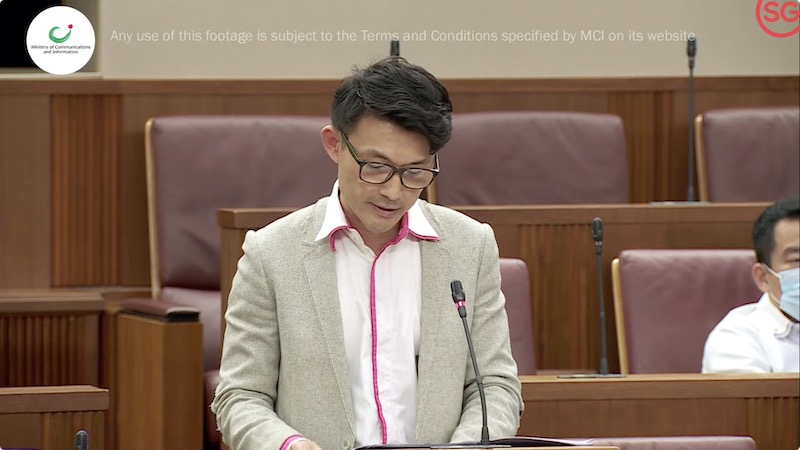
Mr Deputy Speaker, there are many notable men in the fields of government and politics, science and technology, business, sports, arts and entertainment who are openly gay - Prime Minister of Luxembourg Xavier Bettel, Deputy Prime Minister of New Zealand Grant Murray Robertson, father of theoretical computer science and artificial intelligence Alan Turing, Apple CEO Tim Cook, Olympians swimmer Ian Thorpe, diver Tom Daley, poet and playwright Oscar Wilde, actor Sir Ian McKellen, local theatre director and actor Ivan Heng, singer-songwriters Sir Elton John, Ricky Martin, George Michael and Freddie Mercury.
These examples do not signify any direct correlation between their sexual orientation and their talent or achievements. They are just people who walk among us every day - friends, family members, colleagues and peers - who should not be treated any lesser for what they would like to do in private. We need to be inclusive of different lifestyles just as we like to have the choice and freedom to lead our private life in peace.
Therefore, the repeal of Section 3778 of the Penal Code is the right thing to do if we are to ensure that Singapore is an inclusive and diverse place to live in and for everyone to be part of. I spoke in 2007 in support of a repeal that was 23 years after the last review of the Penal Code and I am glad that our government has made this decision today.
Over the last 15 years, public sentiment has evolved and there is a shift away from our previous views, especially more evident among the young who feel there is injustice, that there are penalties targeted specifically at sexual acts between men.
On the reinforcement of the institutions of marriage by the amendment in the Constitution, I welcome it. It signals the pro-family stance of the current government and population. It is also the right thing to allow the definition of marriage to continue to be covered by the Women's Charter. If and when the majority of our population or Parliament feels that the current definition needs to change, that should be for our future generation to decide. It is important that the provisions and any amendments in the Constitution are carefully considered, otherwise it loses its value through capriciousness and constant changes.
Mr Deputy Speaker, now in Mandarin.
[missing chinese speech]
This is a story of the past, which reflects the era when people liked to have a family of their own, whether it was a matchmaker or a married couple.
Now that people's understanding of genetics has improved, they understand that if close relatives are married, it will significantly increase the incidence of genetic diseases and increase the chances of deformity in children. A poem written by Bai Juyi reads: "There are three thousand people in the palace, three thousand love in one body". In ancient times, emperors were not limited to one man and one woman. In fact, we don't have to trace back to the dynasty. Although my grandfather and my grandfather-in-law were not officials, scholars or rich children, they both married two wives. This is obviously illegal now.
These two examples in history remind us that many customs of life, and even state laws, will evolve with the opinions of the world society or the progress of science. It can last for hundreds or thousands of years, or it may be decades or even years. This constitutional amendment will protect the current definition of marriage, and other state policies related to marriage and family will remain unchanged. But the existing definition of one-man-one-woman marriage will continue to be based on the Women's Charter. In other words, if one day more than half of the members of Congress agree to amend the Women's Charter to broaden the definition of marriage, it will be a new law. It will not require the support of two-thirds of the votes like amending the Constitution, which is the operation of the democratic system.
Our generation should not have the right to raise the threshold on this issue of lifelong happiness for the individual, so that the next generation cannot make legal decisions for themselves. I have several friends who are homosexuals. I have never looked at them differently. Some of them are professionals in various fields. Some have been with the same sex partner for decades, and some are enthusiastic about public welfare, making contributions to the society and community. Some people may not have directly known or contacted homosexuals, but I believe everyone has heard these names: Taiwan writer Bai Xianyong, Golden Horse Award for Best Director Tsai Mingliang, Hong Kong film director Kwong King-peng, Yungmen Dance founder Lin Huaiming, Hong Kong singer Huang Yaoming, Leslie Cheung, lyricist Lin Xi and Hong Kong's famous musical star Ren Jianhui. [missing speech] They are all well-known figures in Chinese culture, art and entertainment, with countless loyal readers, viewers, fans and fans.
They all recognize and admit that they are homosexuals. Living in a more conservative traditional oriental society, I believe that it has gone through a great struggle to identify their sexual orientation, accept themselves as loving the same sex, come out publicly, accept public eyes, and even criticism. If we like to read their novels, sing their sweet lyrics, listen to their songs, watch their stage works and movie works, we should not use the law to control their private life and not let them love their beloved. Are we too selfish and too much?
Therefore, I support the abolition of Article 377A of the Penal Code of my country, which no longer considers sexual acts between men to be a criminal offense.
Now I will continue in English. People's views and social norms do change over time. In the past, it was unusual for men to wear earrings, remove body hair or perm their hair, and for women to wear skirts that do not extend below their knees, or for anyone except gangsters to have tattoos. Now we see these expressions of individuality frequently in our everyday lives. We should not tie our future generations to be restricted by today's traditions and norms. Instead, we should advocate for more freedom for them to decide how they want to live their lives.
It is difficult to predict how society will change in the future, and how our children and grandchildren decide to govern themselves then. It is important that members of Singapore's LGBTQ+ community are not discriminated for choosing how they want to live their lives and for whom they love. Nevertheless, changes in public perception will take place, take time, and we will act accordingly if and when these sentiments are right.
Today, we are addressing an act of intimacy, in this case for men with men. Just like any other kind of relationship, let us continue to maintain discretion in the public display of affections. Therefore, the advocacy of specific rights before our society is ready may do more harm than good. We aim to be more progressive, but we must ensure that our direction and steps are carefully considered.
Today, we are taking a step towards a more tolerant and inclusive Singapore. We are debating on the issue of the freedom to love. Let us continue to keep the love for everyone in Singapore's society. I support the repeal of Section 377A and the amendment of the Constitution to protect the prevailing definition of marriage. Thank you.