← All speeches
28 November 2022
Alex Yam
Speech at the Section 377A and Constitutional Amendment Debate
Marsiling-Yew Tee GRC, PAP, Mayor, North West District
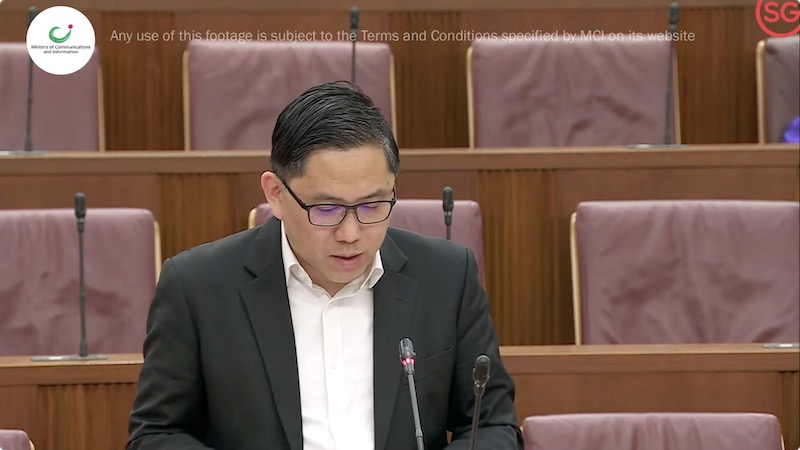
Mr Speaker, sir, this is a debate that I have thought long and hard about, as it is an issue close to my heart and also to many conservative Singaporeans at large. 377A has been a key flashpoint of debate on societal norms, traditional values, freedom, equality and many other topics. This very House has also seen many a fiery and passionate debate over the last two decades on this issue, and in our courts it has witnessed a share of constitutional challenges as no other law perhaps has seen.
And it is with the most recent challenge in the courts that has brought us here today. For many, Section 377A represents a bulwark against a perceived counter-cultural tide that may engulf society should the law be done away. This has held true for many years, in particular the last 15 following the political compromise of 2007. But it was an uneasy compromise, as each constitutional challenge risked it being struck down by the courts rather than legislated by Parliament. By not proactively enforcing 377A, also in essence made it redundant as a law.
At this point, it is worth noting that for most conservatives, opposition to the repeal of 377A is premised not on the Act nor the actors itself, but what the repeal may lead to; a slippery slope of what they view as same-sex unions, adoptions and surrogacy by same-sex couples becoming the norm. Recent interviews with APEC's religious leaders in the media show that it remains a complex issue. However, they do acknowledge that the prerogative of repeal lies with Parliament, as long as the rights of the religious are protected in what they believe in and what they can preach.
As a parliamentarian, my public duty is to make laws that are for all Singaporeans. But I am not just a legislator. As other Members have mentioned, we are guided by our culture, our faith and the environment that we grow up in. I am a Catholic by faith, guided by the teachings of my faith to discern with justice decisions that are moral. I am also a father and a husband whose moral duty it is to ensure stability and a well-being for my children and family.
So I arrive at today's debate having wrestled with all my roles and responsibilities. I also arrive having had the opportunity over the last few months to have robust, intense and passionate discussions with fellow legislators on this topic, and many constituents and Singaporeans who have corresponded with me and feel passionately about this issue on both sides. I am deeply appreciative of the willingness of all sides of the debate to have listened rationally and respectfully to each other to arrive at common ground.
Mr Deputy Speaker, let me first speak on the constitutional amendment, and I will state what I believe marriage to be. Marriage is a bond that draws man and woman together. It is a natural relationship framed not just by love but promises of commitment and responsibility. Marriage aligns with the way in which man and woman live interdependently and bring out the best in each other. Marriage is also a faithful, exclusive, lifelong union of a man and a woman joined in an intimate community. It is the bedrock of families and, conversely, society as well.
A man and woman commit themselves to each other for better or for worse, to the wondrous responsibility of bringing children into the world and caring for them. The call to marriage is also woven deeply into how society works, into the human spirit itself. Man and woman, of course, are equal but, however, are created differently, but made for each other. This sexual difference draws them together in a mutually loving union that should always be open to family.
Therefore, erasing the connection between gender and marriage changes the fundamental nature of a marital union, which is to nurture society's next generation. Unlike other relationships, marriage has the potential to create and nurture new lives, making it a unique institution. For these reasons, States recognise the marriage of a man and woman as a public institution in its laws.
Marriage is protected and honoured because it makes an exclusive and indispensable influence over the common good of society. The real problem today is a view that marriage is simply a formality or a fad, with no social obligations. That is, just a private and personal decision between two persons with nothing to do with wider society. But marriage is not just a religious or cultural institution. It is a legal institution as well.
In a heterosexual marriage, by bringing children into society, the State has an obligation towards the couple and their children. For this reason, marriage requires the State to intervene and regulate it because of the social implications. If it is just a relationship between two ordinary people, we do not regulate ordinary friendship or even platonic friendships.
Mr Deputy Speaker, in preparing for this debate, I was cautioned by quite a number of people that to speak against redefinition of marriage signifies perhaps a failure to keep up with the times, that those of us who hold on to the traditional definition of marriage are conservative and old-fashioned, out of touch with reality. Yet earlier this year, a poll did find that the majority of Singaporeans oppose same-sex marriage. Some 66% also agreed with a proposal to perhaps consider enshrining marriage as only between a man and a woman. Those who share these sentiments are called out online and accused of blind prejudice, of being bigots.
In fact, I accept, as many Members have alluded to, that in taking a stand about this, I and other Members open ourselves to disagreement by others, strong disagreement at times. I appreciate, therefore, this opportunity for a respectful debate in this House, because in a democracy it is important that the viewpoints of all citizens can be heard and taken into consideration.
I do support the constitutional amendment, but as some would be aware, I would have preferred to push for heterosexual marriage to be enshrined or codified as a fundamental liberty in our Constitution. Yet I acknowledge that that same high bar for constitutional amendment in the future would apply to defining marriage in the Constitution right now. Inasmuch as the current amendment would not be considered equivalent to enshrining marriage, it offers a clear definition of marriage as it currently stands, as a union between a man and a woman.
I hold the Government to its word that under its watch, no redefinition of marriage will take place. Even if a future Government does so, it would perhaps require a repeal of this Article 156 that we are introducing, as it would be made redundant. I therefore seek the Government's continued affirmation that this remains its commitment, and this being the year of celebrating family, perhaps all the more apt that we collectively pass this amendment and affirm marriage and the family and their place in our society.
With the passing of the constitutional amendment, the task is not complete. There is added impetus on multiple fronts. The task ahead will require a whole-of-society effort to emphasise the importance of marriage and the family, not just on the part of the Government, but for every individual and group that believes in the importance of marriage and family, and to champion it collectively. Our laws that uphold the family and marriage, especially on spousal rights, must be re-emphasised. Education, that key leveller for society that is widely available for all in Singapore, must continue to ensure that our curricula continues to uphold the current definition of marriage and family. In the media space, print and in broadcasts must also help to shape the norms as currently established.
Mr Speaker, now let me touch on the operational aspect of the amendment. The amendment as it stands in Article 156 spells out that the Government cannot be challenged in court over the definition of marriage. What I hope the Government will help to clarify is the protection of non-Government entities from legal challenges over the issue of marriage in the public sphere. Rightfully, our Government is secular and must remain so. It does not base its laws or policies on religion or faith. But Singapore is also a multi-religious and multi-racial society. We built this city on our Asian values, culture and traditions. Many citizens' beliefs and way of life are shaped in line with their religious and cultural beliefs. Singaporeans must feel free and safe to practise their beliefs, without fear of backlash, as long as their own actions do not cause harm or danger to others. So what protections are there to ensure that businesses and other institutions, such as religious organisations, are freed from legal challenges regarding teachings and beliefs on marriage?
For example, if a religious institution declines to conduct a ceremony for a transgender or same-sex couple, will they be subject to a lawsuit? There are many other implications, and I hope that the Government will be able to clarify this.
Mr Deputy Speaker, I now move on to the repeal of Section 377A of the Penal Code. This is a decision that I struggled deeply over the last few months, personally and professionally. I made the point earlier on the role of Section 377A as a bulwark. If we do pass Article 156, and pass it we must, I am of the belief that the new gate, perhaps not as robust as what many perceive 377A itself to be, but a gate nonetheless, will now be in place. As I have made clear earlier, the non-enforcement of 377A has made the law itself redundant. Parliament alone therefore should be responsible for the passing amendment and repeal of all laws, and she states that right clearly today, rather than wait for the courts to strike it down. As such, I am prepared to support the repeal of 377A with the passage of the constitutional amendment.
I must also emphasise that I am not unsympathetic to the experiences of rejection, violence and vilification that the LGBTQ community faces. I know many of them, and am honoured to enjoy the friendship of many as well. I am also aware of the targeting of religious and social conservatives online by trolls and those opposed to their views on traditional marriage and family. We must therefore come down hard on discrimination in all its forms, in the workplace, in schools, in the public sphere. We should treat bullying and harassment seriously, be they in the physical or virtual spaces, for all parties in this debate. We must endeavour to build a more equal society for all, not just for one. Because whatever the label applied to each of us, we must first acknowledge the wholeness and dignity of each person as an individual being.
I acknowledge as well the passion and drive that the LGBTQ community has displayed over the years in their effort to repeal Section 377A. Many members of the community and their allies are measured, responsible and aware of the complexity of the issue in our society. While we break down this barrier in what is in the private sphere, I continue to believe strongly that this must not lead to the breakdown of the institution of marriage in the public sphere.
Mr Deputy Speaker, I welcome the constitutional amendment as an affirmation of the role and importance of traditional marriage and family in shaping our society. I fully acknowledge as well that the view may evolve in the distant future. But for now, we have an opportunity in this House to ensure that the institution of marriage endures and is championed and celebrated. On the basis of the passage of Article 156, I also give my support for the repeal of 377A.
After the conclusion of all our debate, we must return to working together. Unity is not the absence of disagreement, but a consensus to agree to work together in spite of those disagreements. Mr Deputy Speaker, I support both bills. Thank you.